Camera Safety Systems
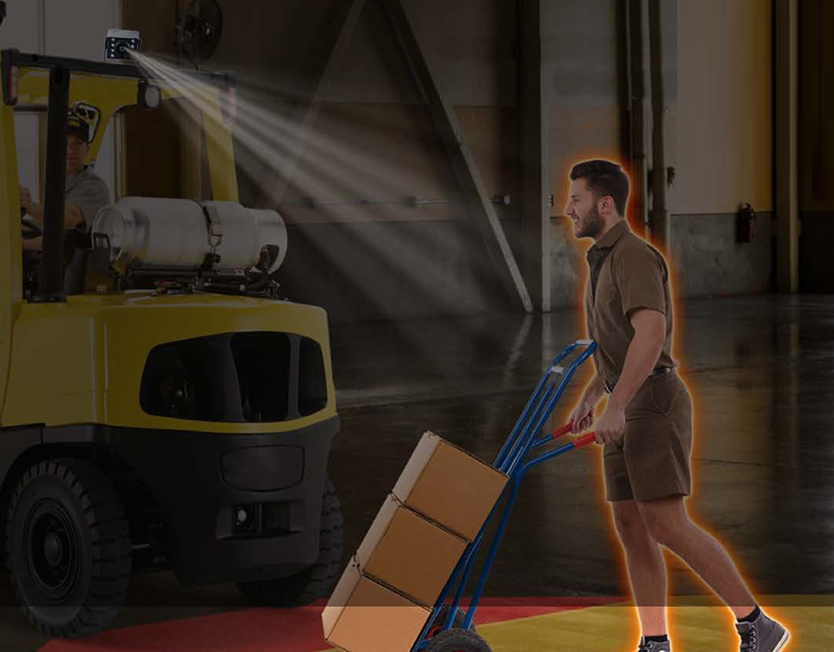
Forklift camera systems use AI-powered cameras mounted on forklifts and other material handling equipment to continuously monitor both the operator and the surrounding area.
Unlike traditional telematics or G-force sensors, these systems detect safety events such as impacts, harsh braking, phone use and product damage in real time — without dedicated personnel watching — and automatically alert operations leadership to improve visibility, operator coaching and safety investigations.
The same industrial camera technology, also known as machine vision, is used across inspection, measurement, quality control and automation. These systems capture, store and archive image data, allowing software to make decisions from the image information and improving manufacturing quality and performance.
Also known as: Forklift cameras · MHE safety cameras · AI forklift monitoring · Machine vision
- Detection
- Real-time, AI
- Interfaces
- GigE / Camera Link / USB
- Sensors
- CMOS or CCD
Applications
- Inspection — identifying defects, cracks or other anomalies on products
- Measurement — determining dimensions, distances or other physical characteristics
- Quality control — ensuring products meet specific standards and specifications
- Automation — guiding robotic arms or other automated equipment
Key components
- Industrial cameras — robust units designed for harsh industrial environments
- Lenses — capturing images at different resolutions and magnifications
- Lighting — essential for capturing high-quality images
- Image processing software — analysing images to extract data and make decisions
- Interfacing — GigE, Camera Link and USB communication
Selection factors
- Resolution — the number of pixels in the image
- Frame rate — the number of images captured per second
- Sensor type — CMOS or CCD
- Lens mount and interface
- Environment — the harshness of the industrial setting
Benefits
- Improved quality through automated inspection and quality control
- Increased efficiency, reducing production time and labour cost
- Reduced errors by minimising human judgement in inspection and measurement
- Enhanced productivity across the operation
Supplied across South Africa & Zambia
Camera Safety Systems is supplied from the Nelspruit head office and warehouse into South Africa and the southern territories, and through the Kitwe branch into Zambia, the Copperbelt and the southern DRC corridor. Johannesburg holds stock for Gauteng and Solwezi serves the North-Western province mines.
Camera Safety Systems — questions
- 01How is this different from forklift telematics?
- Telematics and G-force sensors record that something happened. A camera system sees what happened — a near miss, a phone in a hand, a load being pushed — and flags it, which is what makes operator coaching possible.
- 02Does somebody have to watch the footage?
- No. Events are detected on the unit and pushed to supervision automatically. Footage is there for investigation rather than for continuous monitoring.